
Co-creating in place: Transformative Inter- and Transdisciplinary research through the lens of vagar
ITD27 Training for Students and Early Career Researchers

Key Information
Dates:
In-person training:
• Saturday 29 May: 9.30-13.00; 14.30 – 18.00
• Sunday 30 May: 9.30-13.00; 14.30 – 18.00
• Monday 31 May: 9.30-12.00; 14.00 – 16.00
Participation in the ITD27 Conference and autonomous work:
From Tuesday 1 June to Thursday 3 June
Final presentations:
Thursday 3 June during the farewell session
Venue: In-person, Colégio dos Leões – Universidade de Évora, Évora, Portugal
Conditions and Fees: Accepted participants will need to register for the “Full ITD27 Conference including “Co-creating in place” Training” to take part in the training. For information on the fees please go to: ITD27 Conference Fees.
Abstract:
Inspired by the term vagar, which is the motto of Évora, European Capital of Culture 2027, the ITD27 Training offers a forum for undergraduate, master’s, PhD students’ and early career researchers’ to strengthen their competences in interdisciplinary and transdisciplinary (ITD) research. Vagar, in Portuguese, defines a new art of existence grounded in the principles of slow living, being present, and being in relation with the environment.
Through hands-on creative tools and collaborative experiments, participants will explore challenges in designing and conducting research that meaningfully responds to societal needs. This shift requires both recognition and active integration of different cultural and disciplinary perspectives. In this respect, vagar serves not only as a cultural backdrop but additionally as a vehicle for learning about how to do ITD: as contextually embedded, attentive to the rhythms that knowledge co-production requires, and grounded in the understanding that knowing is inseparable from doing.
Learning Objectives
In an experiential setting, the ITD27 Training will offer practical guidance for undergraduate, master’s, PhD students’ and early career researchers, embarking on or curious about interdisciplinary or transdisciplinary research—projects that involve co-creating socially-relevant transformative knowledge in collaboration with diverse societal actors. It draws on the evolving landscapes of ITD research from both institutional and experiential perspectives, offering tools and resources to enhance collaboration across disciplines, the arts, different sectors and civil society. Through hands-on experimentation with selected methodological tools, participants will explore key challenges in designing, investigating and conducting research that is responsive to societal needs.
At the end of this training students are able to:
- Understand the conceptual and methodological foundations of inter- and transdisciplinary research and the advantages of its application in addressing real-world challenges combining scientific, technological, artistic, and empirical approaches.
- Jointly-frame, and analyse complex societal and environmental problems, and evaluate their potential societal impacts.
- Critically examine positionality, and methodological assumptions, while developing key competencies as reflexivity, and attentiveness needed for inter- and transdisciplinary collaborations.
Selection Criteria and Application
Be an undergraduate, master’s, or PhD students, and early-career researchers (within 3 years of PhD completion), from any scientific or artistic field, with a command of oral and written English.
Application entails completing the corresponding form which includes:
- a motivation letter explaining your interest in transdisciplinary and transformative research and what perspectives or experiences you can bring to the workshop (1 page maximum);
- a short CV (2 pages maximum).
The deadline to submit is October 30th, 2026. A maximum of 25 participants will be admitted. Candidates will be selected based on their motivation and profile in order to ensure a balance across levels of study, scientific areas, gender, and country of origin. Selection results will be communicated by email by January 15th.
Lunches and snacks are included. Accommodations must be arranged and covered by the participants.
Biographies
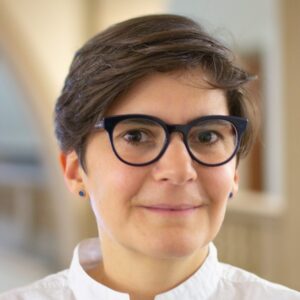
Bianca Vienni-Baptista
Centre for Transformative Sciences, BOKU University, Vienna, Austria
Bianca Vienni-Baptista is a social anthropologist with a PhD and Habilitation in the anthropology of science and technology. She is Professor Dr, Centre for Transformative Sciences at BOKU University, Vienna. Before she was Group Leader of Cultural Studies of Science and Technology at the Transdisciplinarity Lab, ETH Zurich. Bianca’s research examines practices, institutional dynamics, funding and evaluation systems. In addition, she co-designs transformative transdisciplinary processes for sustainable development. Bianca leads multiple international transdisciplinary research projects, advises universities on interdisciplinary strategies, and actively supports innovative inter- and transdisciplinary educational programmes.
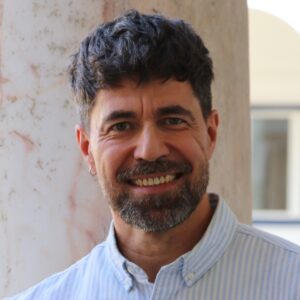
Leonel Alegre
_ARTERIA_LAB, Universidade de Évora, Portugal
Leonel Alegre holds a degree in Physics and Chemistry Teaching from the University of Évora and a PhD in Organometallic Chemistry from Instituto Superior Técnico. After a career in science communication and museum curation, he now researches at the University of Évora, coordinating _ARTERIA_LAB, leading transdisciplinary projects grounded in co-design and participatory processes, exploring community-territory and human-nature relations.

Matthew McCarthy
Complexity Science & Contemplative Studies Consortium, Belgium
Matthew McCarthy is an early-career researcher looking into practices and frameworks that support regenerative ways of living. His core research interest involves mapping and navigating existing epistemic and cultural ruptures, especially from a phenomenological perspective. He is primarily affiliated as a lead researcher at the Complexity Science and Contemplative Studies Consortium (CSCSC), a research community that draws on complexity science and contemplative wisdom traditions to explore questions related to epistemic and ontological transformation.
Contact
For questions about the training, please contact itd27@uevora.pt.